
ECG in 30 Minutes: When Should You Get Your Heart Checked?
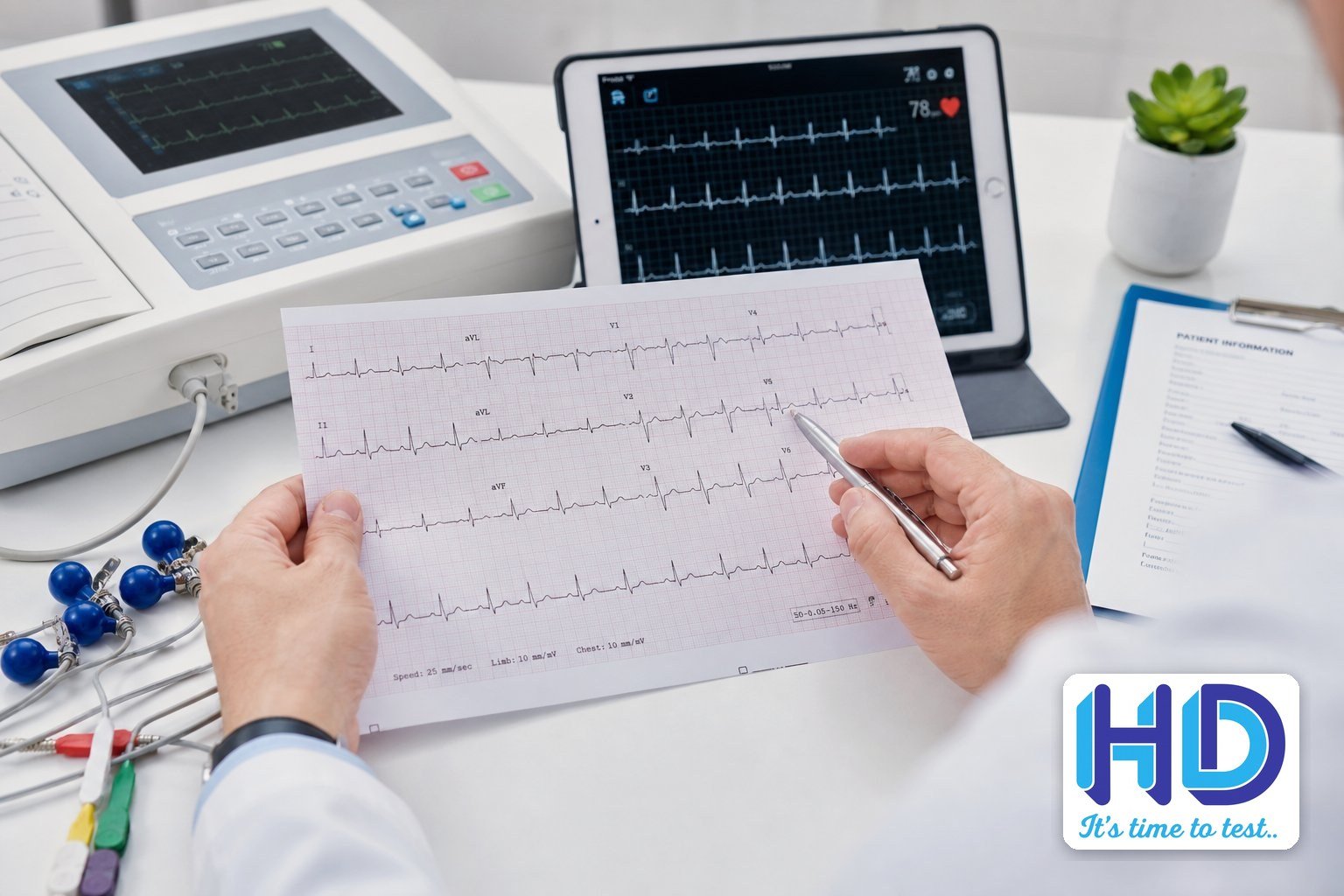
An ECG (electrocardiogram) records the electrical signals of your heart through small stickers placed on your chest, arms and legs. It takes five minutes, is completely painless, needs no fasting, and the report is ready within about 30 minutes.
Symptoms that should not wait
Chest pain or heaviness, a racing or irregular heartbeat, dizziness or fainting episodes, unusual breathlessness on mild activity, and swelling of the feet are classic reasons doctors order an ECG immediately. It is also commonly required before surgery and as part of routine heart checkups after 40.
What an ECG can and cannot show
An ECG detects rhythm problems, heart strain and signs of a past or ongoing heart attack. It does not show artery blockages directly — if your ECG or symptoms suggest a problem, your doctor may advise further tests like an echo or TMT.
Never ignore chest discomfort hoping it will pass. A quick ECG gives answers in minutes and, most importantly, peace of mind.